What led you to guiding and guide training?
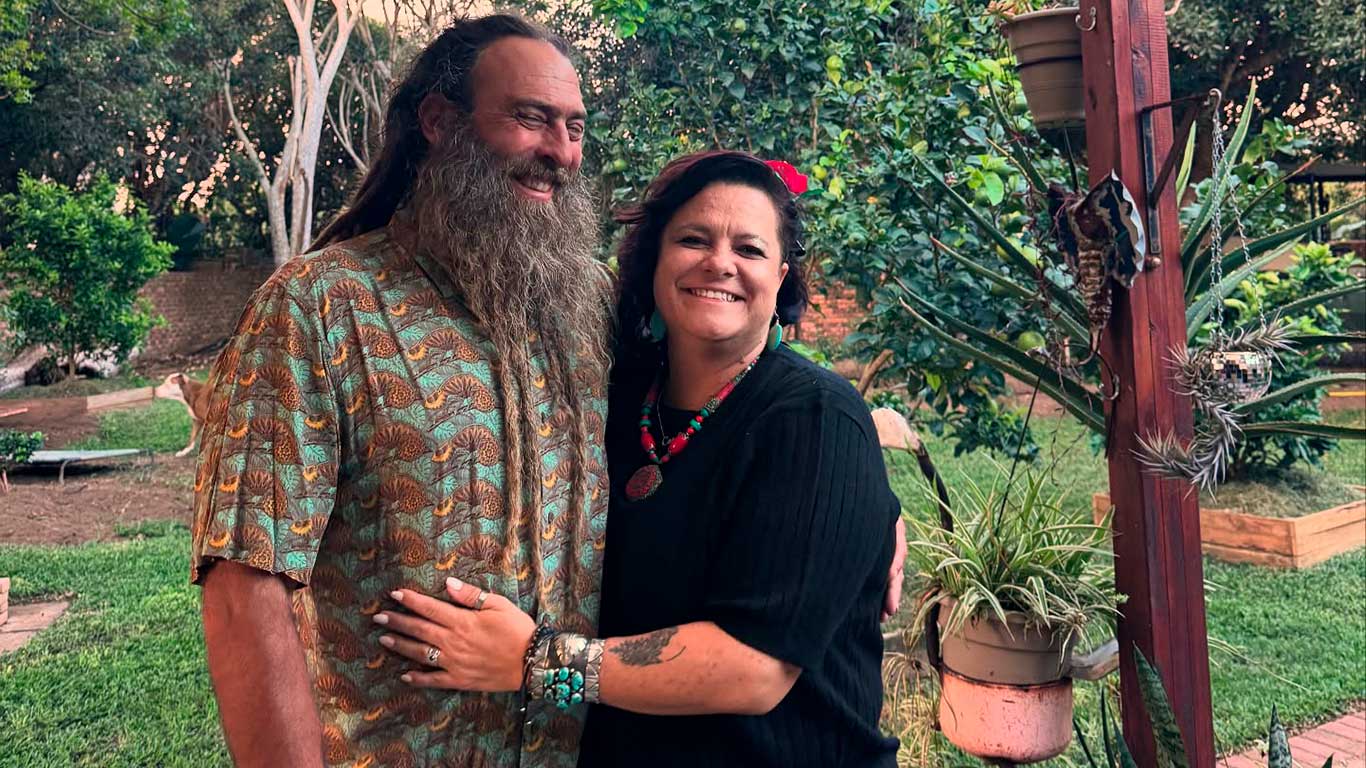
Candice: Honestly? My husband led me here. I'm not a guide myself, and I'm not a guide trainer either. Schalk has always been on the guiding side, while I've been the logistics, admin and hospitality side, the support that lets the guides do what they do best. I've spent 30 years in hospitality. Together, from 1999 we ran a guide training school for other companies, before opening our own in 2005, which we ran for around 20 years. People are my passion, and so are beautiful places. Now our three children are grown and doing their own thing, so we decided it was time to step out of our comfort zone and start afresh.
Schalk: During my school years, many weekends and school holidays were spent being naughty with my cousins on family farms and on family camping trips across South Africa. We were not to be seen by the adults but had to be back by sunset. I believe these family holidays fostered a love for exploration and imagination, which I quickly found again after my school years in nature, guiding. Strangely enough, my first head guide had a similar rule: trainee guides were not to be seen but needed to be back by sunset. It was the best start to my guiding career that I could ever have hoped for, and thirty years later I still guide, mentor and train with the same philosophy.
What are some of your techniques for developing guides?
Candice: For me, developing guides starts with making sure they feel seen and heard. Guiding can look like a romantic profession from the outside, but it comes with real challenges. That's my technique, really, caring for the person behind the guide.
Schalk: I believe that in order to prepare a mind to learn new things, one must first create a sense of curiosity and interest in the subject matter, a thirst to want more. In my opinion, this is the most important and fundamental part of training: fostering that spirit of exploration, to be continually observant and interested in one's surroundings.
How do you support individual guides while fostering a sense of community within the team?
Candice: Guiding is a team effort, and a guide has to work hand in hand with the rest of the hospitality team. In this industry you become a family, whether you like it or not. You work closely, you live together, you eat together, and you share the good times and the hard times. My role is helping guides remember to look out for one another while doing their own jobs well, because when they do, every other department can do theirs too.
Schalk: Candice and I raised our own three children together, and we raised hundreds of young adults into the eco-tourism industry while managing our guide training school over the past twenty-odd years. That experience gave us a knowledge and understanding of personal and group development that assists us greatly on a daily basis.
What do you hope to bring to the Elewana guiding experience?
Candice: What I hope to bring is passion, woven right through the guest journey. So many people spend their whole lives saving for a single trip to Africa. If guides hold on to that awareness, guests will leave with a full heart and a memory of Africa they'll never forget. That's what I hope we bring: a reminder to the team of just how special the place is that they get to call their office.
Schalk: What I hope to bring to the Elewana experience is a culture of sensitivity and respect towards the environment and everyone we meet along the way, and a culture of learning and sharing knowledge. Together, these will hopefully create even more meaningful and personalised guest experiences at Elewana.
How does your training adapt across Elewana's camps and ecosystems?
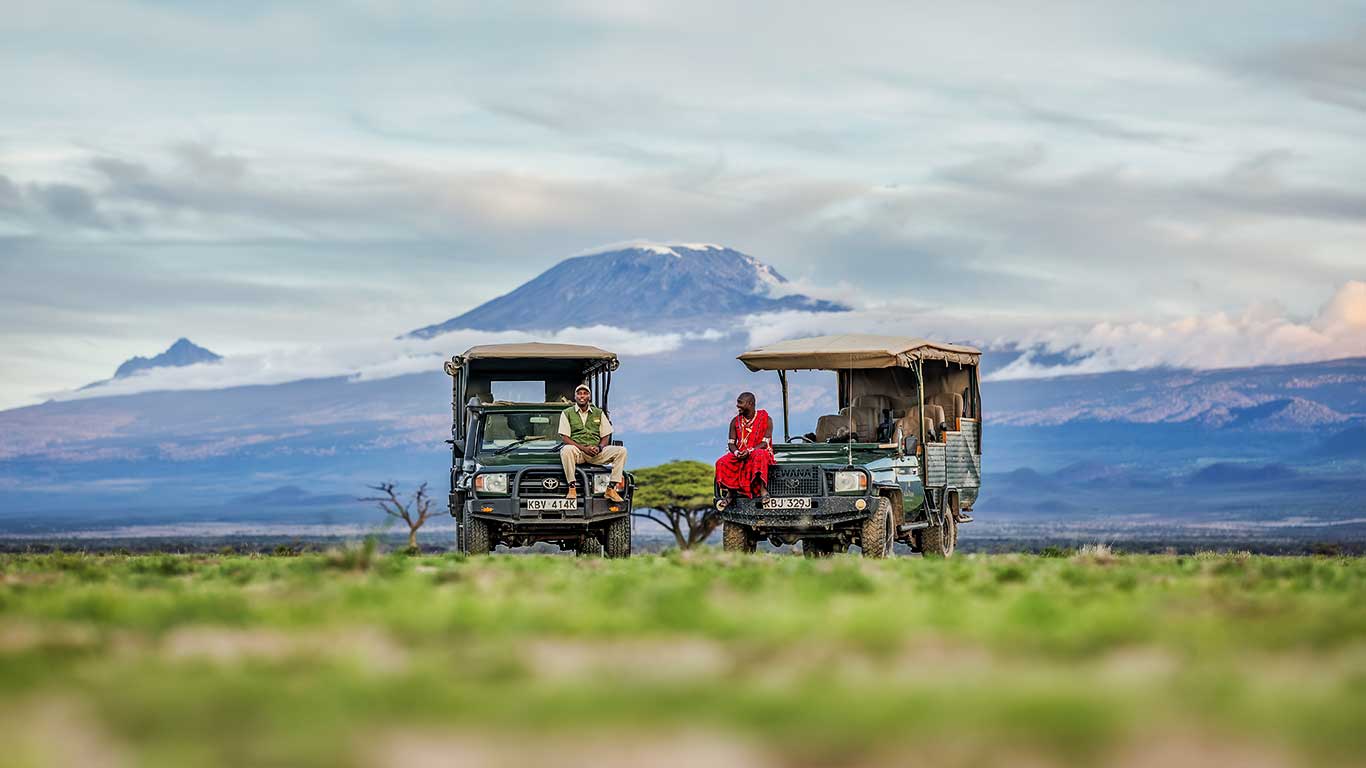
Schalk: Every Elewana destination is unique in its own right. Variations in the history of the rocks and soil, as well as local climatic conditions, have a profound influence on the landscapes and vegetation types of an area. We need to carefully consider all these factors when studying a particular Elewana destination or landscape, to be able to accurately interpret and fully appreciate the uniqueness of each one.
What role do conservation and community play in your guide training?
Candice: For me, these two go hand in hand. Without conservation, without looking after what we have in this world, none of the rest is possible. Conservation matters so deeply because it's how we make sure our children, our grandchildren and the generations after them get to experience nature and Africa in her true glory. Community plays an enormous part too. We want to develop communities as we go, giving everyone the opportunity to become guides, women and men alike. And not only guides, but the whole hospitality team: the chefs, the managers, the butlers. It takes a village. You want the people of the land working at and managing these properties, sharing their stories, so guests understand this isn't just a lodge or a camp. It's home. It's five generations of butlers, five generations of housekeepers.
Schalk: Everything we do is conservation. Guides are the ambassadors and voices for the conservation of landscapes and their communities. Conservation managers, landowners, anti-poaching rangers, and the plants and animals of a landscape don't have the opportunity to share their messages with our international visitors. All of them are represented by the messages guides relay to our guests.
What are some of your most memorable experiences in the field?
Candice: After 30 years of travelling to different lodges and places, there are honestly too many to count. Two of our three children are now in the industry themselves, so clearly it runs in our blood. As for sightings, Mother Nature surprises me every single time. We were recently at Elsa's Kopje in Meru National Park, and on our last morning, heading to the airstrip, Schalk and one of the guides were talking through the landscape, saying what perfect leopard country it was. We came around a corner, I glanced to my left, and there was a glorious leopard sitting there, looking straight at us. That's the bush for you.
Schalk: The beauty of spending time in nature is the realisation that the diversity of possibilities is endless. As an example, no two zebras have ever had, or ever will have, identical patterns. You never know what is going to happen today, and that endless possibility is what I love most about nature.